

How To Repair A Small Hole In The Ceiling
How to Repair Ceiling Holes
Ceiling holes nowadays a particular challenge when attempting to do repairs. Considering gravity will pull down on the patching fabric equally information technology dries, a bulge tin can develop in the surface and cause an unsightly finish when you're washed. If you take a large ceiling hole of more than than 6 or 7 inches to repair, you should utilise the procedure at this link to do information technology.

If yous're dealing with a smaller ceiling hole, you tin can apply a self-sticking, aluminum reinforced patch like the 1 shown here for a quick, piece of cake repair process. A drywall patch similar this can be found merely about anywhere wall repair materials are available. These are basically fiberglass-mesh over a thin piece of perforated aluminum. They come in a few sizes starting at about 4 inches and going up to eight or 10 inches. These are cocky-sticking so you but have to employ it over the hole, sticking information technology to the surrounding surface and then cover the whole area with a few coats of joint compound.
What You'll Demand to Repair a Ceiling Hole
- An Aluminum Reinforced Patch
- Joint Compound
- A Articulation Knife
- A Mud Pan
- Sandpaper
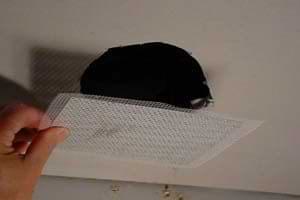
Measure out the hole to be covered and get a patch that measures a couple inches more than that. An inch overlap on each side of the opening should exist enough to brand the patch work as intended. Be sure the ceiling surface around the hole is smooth and free of dust or other contaminants before applying the patch. If you take water impairment or other stains, seal that first with a primer/sealer and allow information technology dry out earlier applying the patch.
Employ a Starting time Glaze of Mud
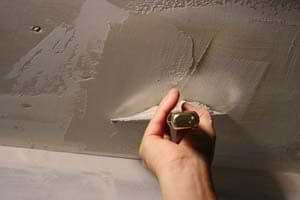
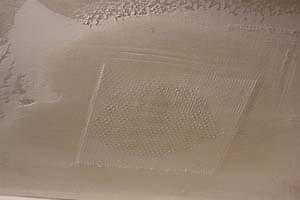
Using setting compound, also chosen mud, for this job will brand for the best possible result but set-mixed chemical compound will work too and it won't crave mixing. It will, still, take longer to do the job considering the ready-mixed chemical compound will accept longer to dry.
Start past applying a thick glaze of mud over the whole patch, overlapping onto the surrounding ceiling by a few inches on all sides. Immediately get back over the mud with the joint knife to skim off the excess, leaving a very sparse layer over the patch and the surrounding ceiling.
This first coat is just intended to fill in the mesh and start to blend the surface into the ceiling material so don't wait it to hide the patch. Ignore whatsoever ridges in the surface left by the pocketknife blade or other roughness in the mud every bit you skim, these will be removed later. Let the mud dry completely.
Employ A Second Coat of Mud
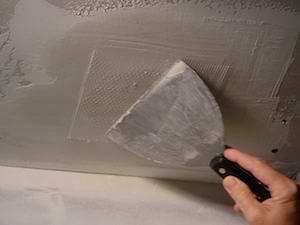
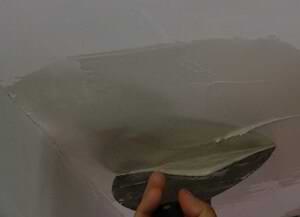
When the first coat has set and dried, apply the articulation pocketknife in a frontwards stroke to shave off whatsoever ridges or bumps in the surface of the mud. Lightly sand the edges around the perimeter to blend it with the existing ceiling pigment. Gently wipe off the sanding dust with a damp cloth before proceeding.
Apply some other coat of mud over the whole patch, overlapping the edges of the first mud coat and spreading out onto the surrounding ceiling. As with the outset coat, apply backlog mud first and then skim information technology off to leave a polish finish.
Stroke with the joint knife perpendicular to the direction yous used with the first coat. If you lot stroked due east to westward with the starting time coat, stroke northward to s with this one. This volition help to attain an overall level end in the repair surface and to hide the edges of the aluminum. Let the mud dry completely and shave/sand as necessary to remove any roughness in the surface before wiping the grit away.
Apply a Terminal Coat
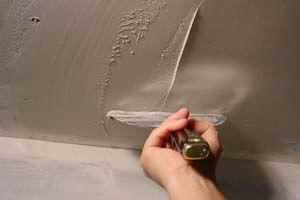
Apply a third and final coat of mud to cover the whole patch, again, overlapping the previous mud glaze and spreading out onto the surrounding ceiling. Utilise the same process of thick glaze followed by skimming. Again, skim with perpendicular strokes to the previous coat.
Alternating your strokes should take tapered the aluminum edges into the existing surface making them invisible at this betoken. If that didn't happen and you can still see the metal showing through the mud, you lot will need to apply some other coat to encompass information technology. Use a scrap of fresh mud over the visible metallic and stroke parallel over the border to blend information technology with the rest of the repair surface.
Touch Up the Pigment

Let the final glaze of mud dry out completely earlier attempting to sand it and bear upon up the paint. Employ a light touch to sand the whole area giving extra attention to the edges to alloy them with the existing ceiling paint.
To finish, castor away the sanding dust and lightly wipe off the residue with a clammy rag before touching up the paint. If your stop paint is apartment latex, it will be self-priming. If you're using semi-gloss, oil-based, or another shiny pigment finish, prime number the patch with a latex primer or other apartment latex paint kickoff.
- How to Repair Bubbling Paint
- How to Repair Torn Drywall Paper
- Repairing Water Damaged Drywall
- Repairing Water Damaged Plaster
- Repairing Aging Plaster
- Repairing Major Plaster Damage
- Repairing Wood Board Plaster
- Repairing Drywall Nail Pops
- Repairing Small Wall Holes
- Repairing Large Wall Holes
- Repairing Large Ceiling Holes
- Repairing Pocket-sized Ceiling Holes
- Repairing Wall and Ceiling Cracks
- Repairing Cracks with Expanding Foam
- Installing a Drywall Ceiling
- Finishing Recessed Drywall Joints
- Finishing Metallic Drywall Corner Dewdrop
- Finishing Paper Corner Bead
- Finishing Inside Drywall Corners
- Finishing Drywall Butt Joints
- How to Do Drywall Texturing
- Skim Coating on Walls and Ceilings
- Sanding Drywall Joint Compound
- Wall Tools and Materials Guide
Source: https://www.do-it-yourself-help.com/how-to-repair-ceiling-holes.html
0 Response to "How To Repair A Small Hole In The Ceiling"
Post a Comment